
The 6 Best EMS Platforms for Small-Footprint Multi-Site Facilities in 2026 (Comparison Table)

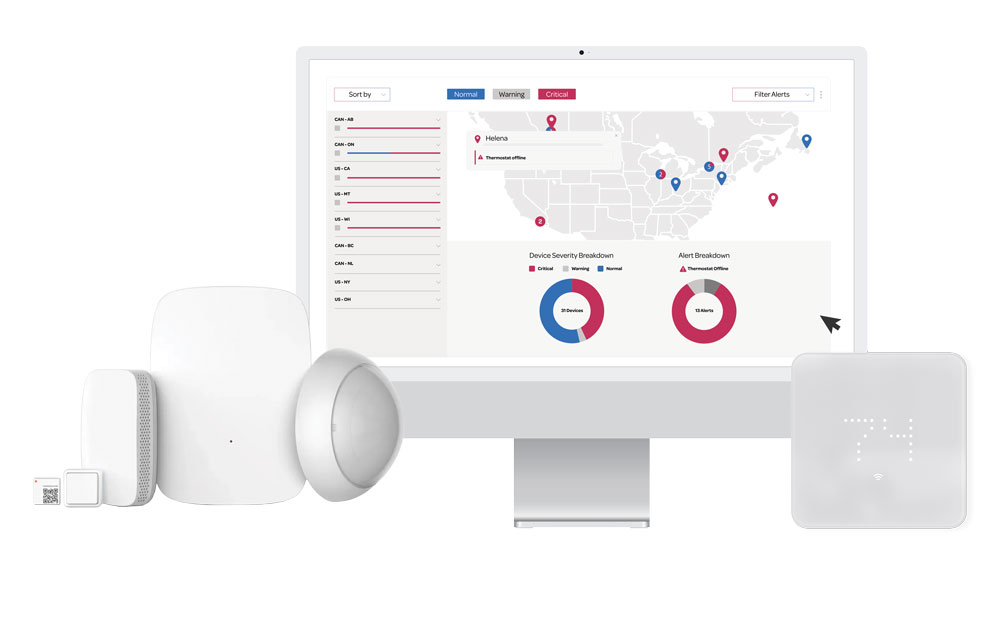
TLDR Summary:
There is no shortage of solutions when it comes to energy management systems, building management, or building automation, but they all serve a specific purpose. For smaller-footprint multi-site facilities, there are actually only a handful that are recommended if you want visibility and control for HVAC systems across your portfolio. Below is a summarization of those solutions, and a comparison table to cap it off, giving you an objective view of the most important elements to consider for your retail chain, restaurant group, or professional services facilities.
Who is this article for?
- Facility managers
- Operations leaders
- Multi-site maintenance & service professionals
Introduction: The Everyday Challenge for Facility Managers
Juggling costs, equipment reliability, and limited visibility of critical assets all fall on the plate of facility managers and operations leaders and is driving stress-levels to new heights.
The complexity of managing HVAC and comfort complaints across multiple locations (e.g., retail, restaurants, clinics, convenience stores), with a limited FM headcount is increasing over the last 5 years with no sign of slowing down.
Tech enabled support like Energy Management Systems (EMS) is part of the answer—but many EMS and BMS options are built with large-scale, complex building needs in mind. This leaves small-footprint real estate in the dust as ROI can become unachievable with over-engineered options for smaller locations.
Who Makes the Best Energy Management System?
That’s what we’ll be digging into and sharing different perspectives to help you choose the right system for your organization’s needs. We consider features, complexity, cost, robust vs. simplistic, and more to clarify what makes them uniquely effective for sites under 10,000 sq ft.
The 6 Best Energy Management Systems (for small-footprint multi-sites)
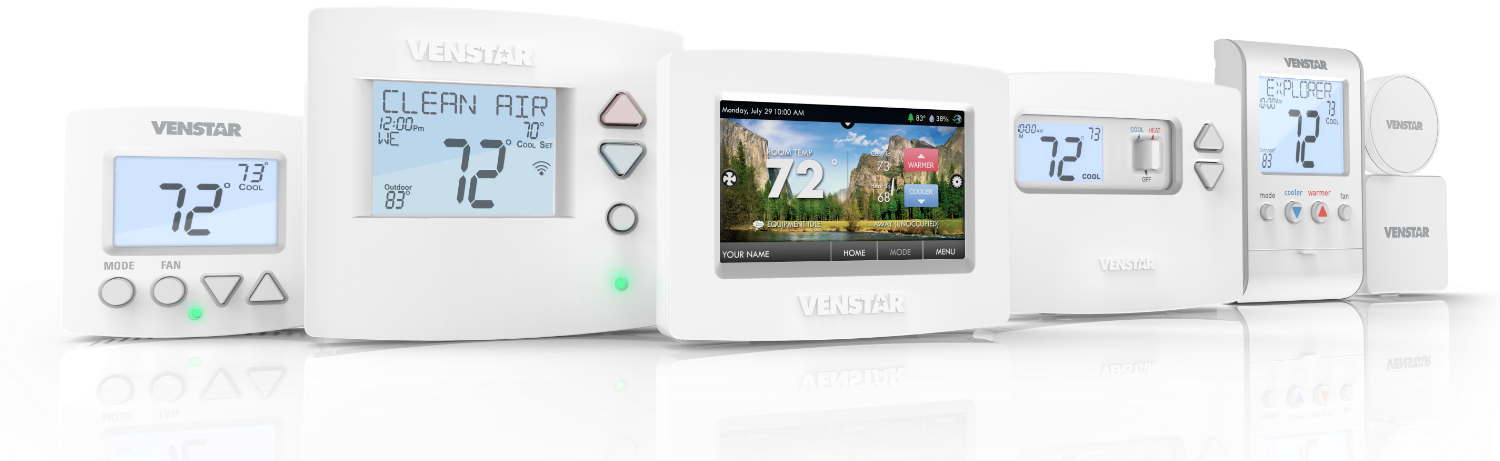
Venstar
Overview: Venstar delivers a scalable Wi-Fi thermostat and energy-management ecosystem—anchored by its Skyport® Cloud platform and Surveyor® EMS—that enables small scale multi-site businesses and residential spaces to monitor and control HVAC systems remotely, and document energy savings across retail networks.
- Focus: Small-box retailers, schools, even residential options.
- Strengths: Nice color touchscreen, Demand-side energy management options, good compliance standards. Local API option to manually support specific integrations.
- Challenges: Mostly archaic hardware outside 1 touchscreen line, basic commercial configuration options.
- Best suited for: Residential applications and retail locations with less than 25 locations.
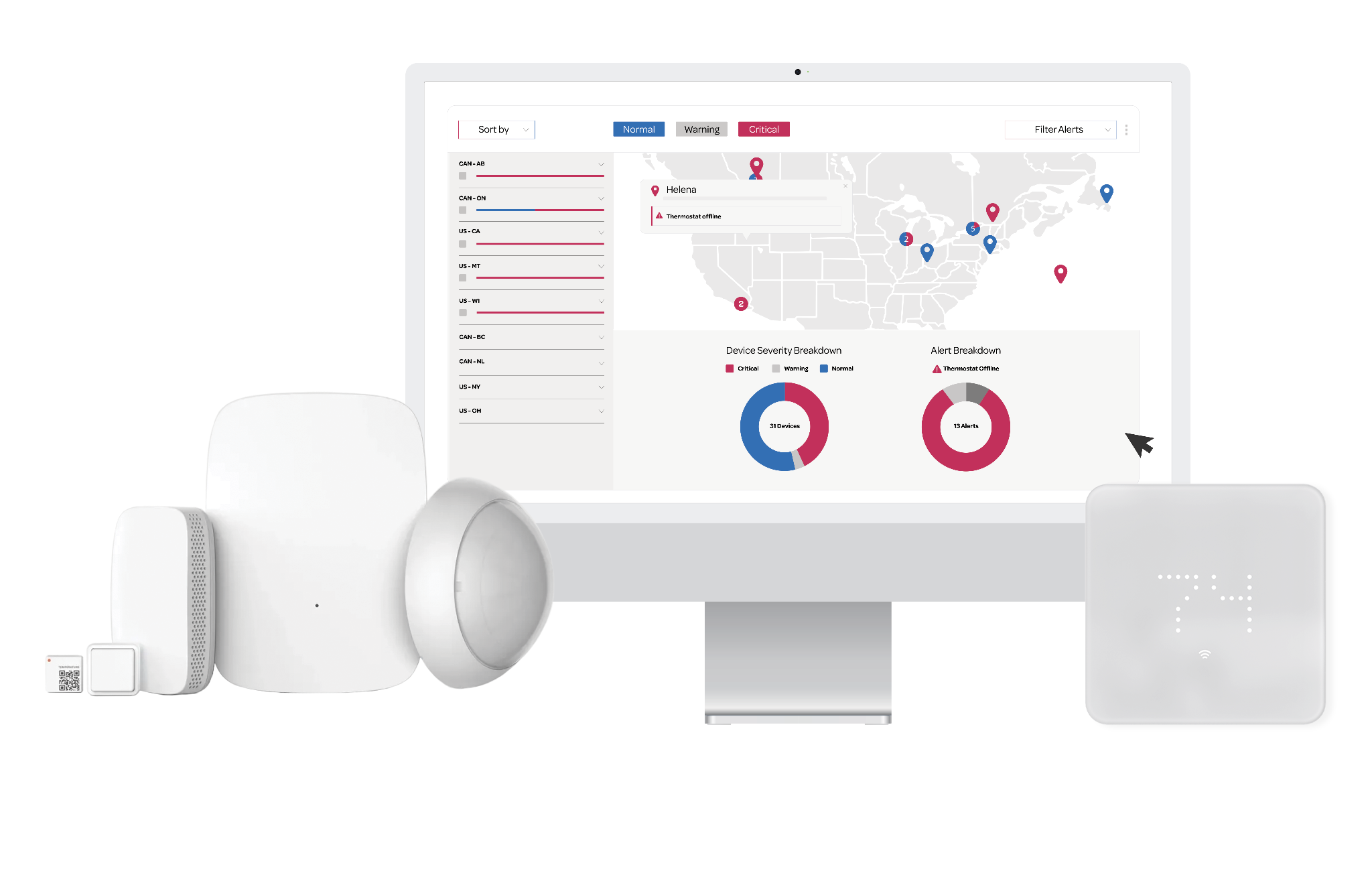
Mysa HQ
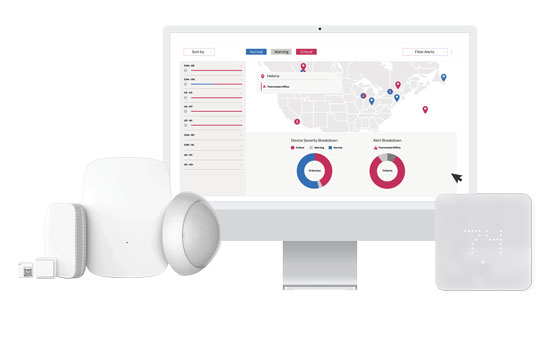
- Overview: Mysa HQ is the lightweight EMS designed for lean facilities teams at small-box chain retailers, restaurants, and commercial service providers. Providing real-time, portfolio-wide visibility and control, FMs use Mysa HQ to conquer HVAC chaos, proactively preventing equipment breakdowns, cutting emergency service calls, and keeping spaces comfortable and energy efficient. Unlike traditional EMS or BAS, Mysa HQ combines enterprise-grade controls and high-touch partnership with fast installs, quick ROI, and a web dashboard you’ll actually enjoy using.
- Focus: Multi-site retail, restaurant, financial institution, clinic under 10,000sq ft.
- Strengths: Intuitive hardware & software UX and fast deployment, cost effective for fast ROI.
- Challenges: No demand-side energy regulation,
- Best suited for: Small footprint multi-site facilities managing high volumes of locations per headcount requiring simplicity and scalability in HVAC management.
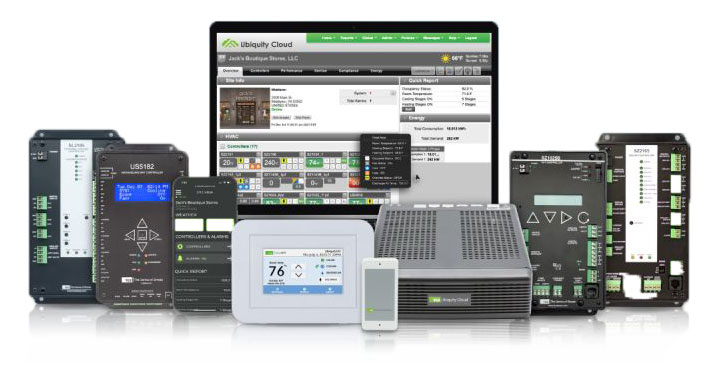
TCS BAS
- Overview: TCS Basys Controls’ “Ubiquity Cloud” building-automation software combines cloud-based, BACnet-compatible controls with an enterprise accessible dashboard designed for multi-site portfolios requiring integration with a variety of proprietary modules throughout the system — making it a strong option for organizations with complex needs. TCS actually consider themselves a 'building automation system' which classifies as a more
- Focus: Medium-to-large facilities; schools, churches, department stores
- Strengths: Granular system control, lots of hardware choices for specific uses
- Challenges: Complex setup, dated UI, higher costs & ongoing management required
- Best suited for: Buildings with high-complexity needs, and dedicated teams to monitor & manage the system and its reporting insights to define resulting actions
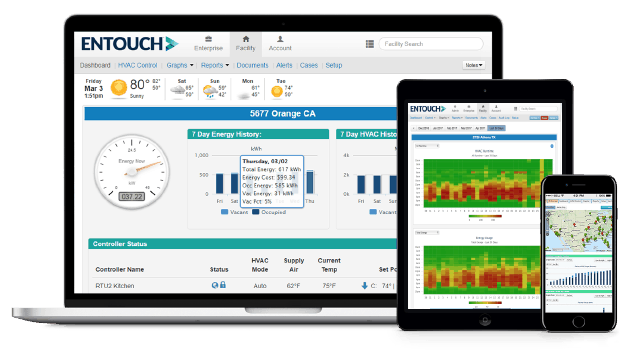
Entouch Controls
- Overview: EnTouch Controls offers a turnkey, EMS platform on its ENTOUCH.one and ENTOUCH.cloud stack, which delivers centralized monitoring, analytics, and control of HVAC, lighting, refrigeration and energy usage across multi-site portfolios.
- Focus: Mid-market retail, childcare, healthcare, and fitness chains.
- Strengths: Fast install, broad-spectrum control (HVAC, lighting, refrigeration, etc.), deep analytics.
- Challenges: Higher costs, complex interface, high technical configuration ability.
- Best suited for: Multi-site organizations with high ratios of facility managers to locations to support technical nature of the system
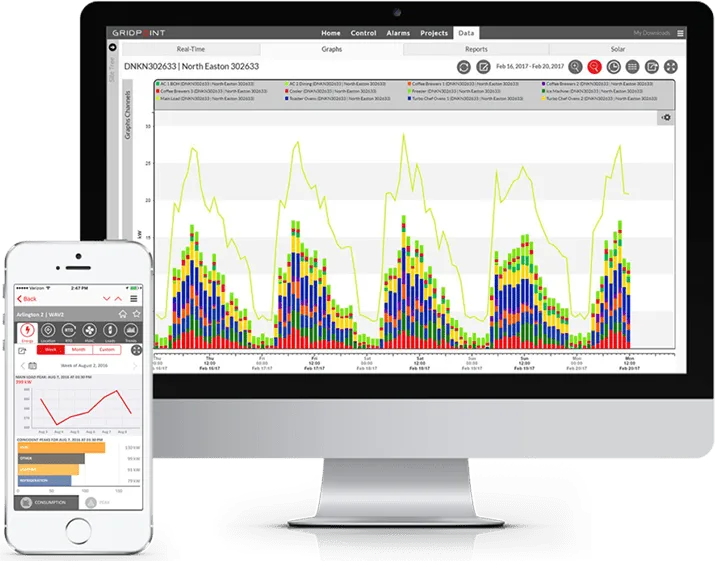
GridPoint
- Overview: GridPoint delivers an enterprise-grade EMS platform that provides real-time metering, HVAC/lighting/refrigeration asset health diagnostics, automated scheduling and demand-response capabilities across single or multi-site portfolios solving for complex problems.
- Focus: Med/large multi-site enterprises (airports, data centers, healthcare, industrial).
- Strengths: Powerful data and sustainability analytics.
- Challenges: Complicated UI, high cost, poor reliability reviews.
- Best suited for: Large facilities with complex needs and teams with plentiful technical capabilities.
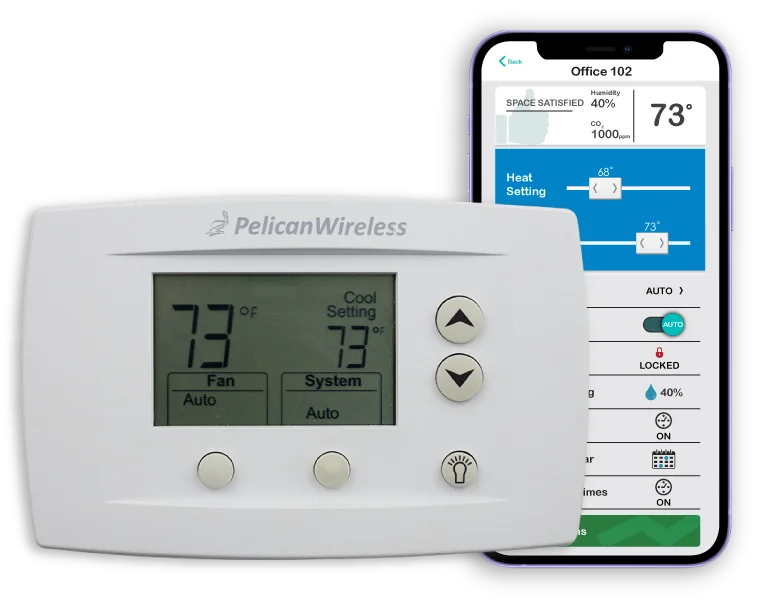
Pelican Wireless
- Overview: Pelican Wireless offers a flexible, Wi-Fi–based Energy Management System designed primarily for HVAC control in medium to large-scale commercial and multifamily spaces. Its cloud-connected thermostats and centralized management tools provide visibility and scheduling capabilities, with some unique offerings such as their mesh-network.
- Focus: Larger footprint locations—schools, municipalities, universities.
- Strengths: Secure, mesh-networked “climate management” platform; built-in sensors.
- Challenges: Cumbersome multi-device setup, gateway/repeater requirements.
- Best Suited for: Great for larger-scale infrastructure, but it comes with the cost of a complex setup, which can be difficult for a lean operations team. Significant dedicated resources required to drive full value from the system.
Get a customized EMS ROI assessment for your portfolio (free) >>
"We’ve been searching for a lightweight, affordable EMS solution that fits our real-world constraints, and Mysa HQ is right on target. What stood out was how intuitive and easy to deploy the system is—no PhD in HVAC required. The approach of scaling up from residential simplicity to commercial functionality makes a lot of sense. Mysa is hitting that sweet spot: smarter and more capable than consumer-grade tech, but without the cost and complexity of a traditional BMS. This makes energy savings and ROI truly achievable."
— Eric, Facilities & Energy Systems, major retailer - 3,500+ stores
What’s the right Energy Management System for Your Business?
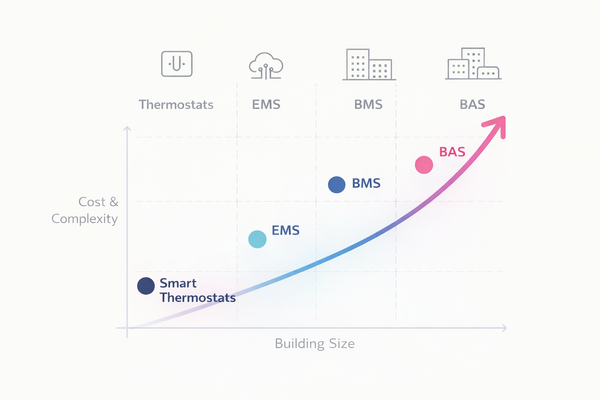
Consider a few basic categories of EMS to help you right-size the solution to your needs, and the relative size of your facility management team.
Basic starter: Many people are still relying on programmable thermostats across many locations. The cost is appealing but lacks the remote monitoring & control which will effectively result in reducing stressful surprises and the ensuing cost of emergency repairs. It’s fiscally and operationally responsible to avoid the cheapest option.
Middle of the road: If you are like the above mentioned FMs who are managing a lot with what feels like insufficient resources, you need a simple system that keeps you in proactive control over your entire portfolio and their critical HVAC systems, without getting lost in technical debt or unnecessary complexity that is unmanageable for a small team. Make sure to consider what you (or your peers who’ve gone through this process already), find to be core needs, and what falls into the ‘nice to have’ category.
High-tech: If you require a high-level of detail on specific components demand-side load balancing of your heating and cooling units, systems can deliver on that, but be wary of the cost and operational workload it takes to set that up and leverage ongoing insights for it. In the end, you’ll likely be rolling a truck so your qualified contractor can fix an issue so you’re back to business as usual. Many organizations have ‘shot for the stars’ and been overwhelmed with the reality of managing such a system. This may be the largest failure to launch scenario with energy management systems or building management systems for multi-site organizations.
Head to Head:
We’ve curated an insightful comparison of the above mentioned EMS options, to help you identify the best fit for your facility management needs.
The Takeaway: Right-Size Your Solution to Your Specific Needs
Industry-grade BMS platforms are built to manage complex, multi-system enterprise buildings and can be time-consuming and complex to deploy. In contrast, Lightweight energy management systems are deliberately designed for small-box, multi-site portfolios to offer the visibility, centralized control, and run-time insights without the overkill, IT burden, or complexity of traditional systems.
With a straightforward EMS, facility managers get back what they really need: time, simplicity, and confidence that every location runs just right.
FAQ’s
What is an EMS?
An EMS, or Energy Management System, is a combination of tools, software, and best practices used to monitor, control, and optimize energy consumption to reduce costs and improve efficiency. It typically involves installing sensors to gather data, using software to analyze it for inefficiencies, and implementing control systems (like for HVAC and lighting) to make automated adjustments. The goal is to lower energy bills, reduce environmental impact, and enhance a company's or building's overall performance.
Why get an EMS?
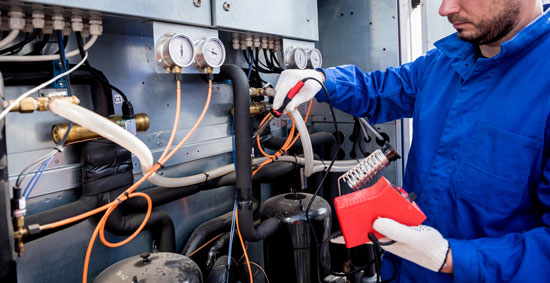
Remove the stress of emergency failures by gaining remote visibility & control of HVAC across hundreds of stores. Dont wait for a complaint to roll a truck at after-hours rate.
What’s the ROI of an EMS?
It depends on the cost and relative benefit of the system but it can be as early as 6-18 months, depending on your current setup. Talk through some modelling with your prospective EMS provider to help envision what that looks like given your equipment and energy costs in your area.
How much does an EMS cost?
That depends on the features you want, and the cost of the hardware & software to support those needs. You can have a simple connected thermostat, or you could have multiple, each with numerous sensors all feeding back into a centralized system. Choose an EMS vendor that understands your business and can customize to your needs, and no more.
Can I install an EMS myself?
With the wide variety of HVAC equipment, it’s highly recommended to work with your EMS vendor and qualified mechanical contractors to get it reliably installed with as few surprises as possible.
The EMS Designed for Locations Under 20,000 sq ft:
Mysa HQ is the lightweight EMS designed for lean facilities teams at small-box chain retailers, restaurants, and commercial service providers. Providing real-time, portfolio-wide visibility and control, FMs use Mysa HQ to conquer HVAC chaos, proactively preventing equipment breakdowns, cutting emergency service calls, and keeping spaces comfortable and energy efficient. Unlike traditional EMS or BAS, Mysa HQ combines enterprise-grade controls and high-touch partnership with fast installs, quick ROI, and a web dashboard you’ll actually enjoy using.
Schedule a live demonstation >>

Ready to learn more?
See Mysa HQ in action, get a personalized ROI analysis, and start building the case for a smarter energy management system in your facilities.
